There’s more to surviving hurricane season than knowing how and when to evacuate. Even in summers without any significant hurricanes coming near the island, I have noticed that hurricanes still interfere with life, and cause stress.
We usually are very lucky to get plenty of warning about every major storm of the season. The tracking begins very early, when they still are far from Florida. Although this early warning can save lots of lives, it also wears on the nerves, as we pay attention to every single storm for days and days. There’s usually a storm somewhere, so this means we are looking at storms and worrying about the results for most of the summer. If nothing else, it is distracting and tiring.
From June through October, we tend to obsess about watching tropical updates on the local news channel and on the Weather Channel, at ten minutes before the hour. Then there are all the programs about storm disasters. It’s enough to make you nervous even if no storm comes your way.
Then, if it looks like a storm might be coming your way, life is interrupted even more. At our house, we begin to pay attention to how many bottles of water we have, and to how much canned and dried food. If the predicted cone-shaped path of the hurricane continues to include Anna Maria Island, we then start organizing our important possessions. We make sure we have enough plywood for the windows. In the years before we had a mainland evacuation destination, we also would look around for motels on the mainland, and often we’d make a reservation just in case we needed it. The problem is that it’s sometimes difficult to know, ahead of time, exactly which nights you might need that reservation. And you might not need it at all. But if you wait, the motels will be full and there is the risk of having nowhere to go.
Anna Maria Island seems to have survived the closure of one of its three bridges for 37 days. The maintenance and repair job was done faster than the projected 45-day project that had been planned. As islanders heave a sigh of relief, it is interesting to look back at the whole issue of bridges and how this is linked to life and business on an island.
The people who have chosen to retire on beautiful Anna Maria Island have chosen Old Florida over the more common new development that lines most of Florida’s coast. For Old Florida to exist there has to be something “missing,” in terms of accessibility and convenience. People who want to live fast and have instant gratification are not looking for Old Florida. Such people are accommodated very well by municipalities and developers who want to grow by catering to the latest trends, and catering to the crowds. An island with small bridges that are not always open is an island that is more likely to retain the charm of Old Florida. But what about those times the Florida retiree needs to get to the hospital fast?
Anna Maria Island bridge will close from early morning, Monday, September 29th, to allow planned repairs.
The closure is for 45 days, but may be shorter if the work progresses ahead of schedule, or longer if there are delays.
Traffic to and from the island will be detoured to the Cortez bridge to the south. Increased traffic flows at the Bradenton Beach end of Cortez Bridge will be accommodated by a lengthened turn lane.
All eyes were on the tropics this week as a tropical depression in the Atlantic became a storm named Fay, when wind speeds hit 39 mph.
As Fay crossed the Dominican Republic and Haiti, forecasters correctly predicted a turn to the NW and over Cuba. With no sign of weakening over land, Fay headed toward Florida’s SW coastline, maintaining 60mph winds, and leaving a wake of flooding rains as it made its first US landfall over Key West.
Even with recent thunderstorms and measurable rainfall, watering restrictions have been extended for the 16 counties monitored by Southwest Florida Water Management District (Swiftmud).
Swiftmud said that the area received 5 inches average of rain in June, which is about two thirds normal. The current rainfall deficit is 17.2″ over the last two years of drought conditions, with below normal ground water levels.
Watering restrictions apply to all sources of public and private water supplies including wells and ponds.
The official start to the Atlantic Hurricane Season is June 1st. Now is a good time to make preparations for an emergency evacuation and formulate your disaster plan.
The Colorado State University Tropical Meteorology Project has published its forecast for the Atlantic basin hurricane activity, based on 58 years of past data and predictive statistical analysis. Early season forecasts are for the following:
Atlantic Hurricane Season
April 2008 forecast
1950 – 2007 average
Named storms (>35mph)
15
9.6
Hurricanes (>72mph)
8
5.9
Major hurricanes (>111mph)
4
2.3
US landfall likelihood
69%
52%
Gulf Coast landfall
44%
30%
The active year of 2005 and Hurricane Katrina may have passed into memory, and 2007 was a quiet season for the Florida Gulf Coast, but tropical activity is intensifying each year. Remember that a record breaking two intense Category 5 hurricanes made landfall in Mexico last year. And it was just 2004 when Hurricane Charlie breached North Captiva Island, not far south of here.
The recent Myanmar cyclone is a wake-up call that the hurricane season is upon us.
On Saturday, May 31st, Manatee County Homebuyer and Hurricane Expo will be held at the Manatee Civic Center, Haben Blvd, Palmetto, 10am – 3pm. The expo will present personal hurricane planning, disaster planning, and property protection.
In another episode of the continuing non-reality show of “Let’s see what FEMA rules are today”, letters from the Federal Emergency Management Agency to the local island cities offices announced that buildings “having the lowest floor one foot or more below the base flood elevation will no longer be eligible for the CRS discount.”
The Community Rating System is a method of assessing cities’ overall exposure to flood damage loss. By installing adequate drainage systems and enforcing building codes to mitigate flood damage, communities can be eligible for a 5 – 45% discount for residents’ flood insurance premiums.
FEMA’s new edict beginning May 1st excludes specific properties “at high risk” and “not compliant” in the “Special Flood Hazard Area” from getting the community discount. A homeowner will discover if he is excluded when their flood insurance policy comes up for renewal – the policy will have a small zero in the CRS discount box.
But some people in older houses with ground floor living area don’t need to panic yet. Houses that were built prior to 1975 are grand-fathered in, plus there are several other exemptions from the ‘rule’.
Whatever your current structure, be it old, new, remodeled, non-conforming, grand-fathered, permitted, exempt, or other, don’t expect a notification of change to your flood coverage cost. Your first clue will be when you get your flood insurance annual renewal bill.
City of Holmes Beach commissioners presented their first reading of a draft new ordinance related to building code and permitting in the city’s floodplain.
The 31-page ordinance is the result of FEMA, (We’re Here To Help You), having questions about code implementation and compliance with current standards.
On February 12th, the city commissioners put a moratorium on new building permits until a new regulations could be researched and analyzed. The March 25th meeting brought to light the draft reading.
The new regulations are expected to improve ranking with the National Flood Insurance Program system, which provides discounts for cities that participate in the government’s flood insurance program.
The intent is to “attempt to mitigate and prevent the cumulative effect of obstructions of floodplains causing increases in flood heights and velocities and occupancy in flood-hazard areas by uses vulnerable to floods of hazardous to other lands which are inadequately elevated, flood proof or otherwise unprotected from flood damages.”
The NFIP defines building improvements in the floodplain as minor or major. A major, or “substantial improvement” is
As if the housing market slowdown were not enough to challenge local contractors, now Holmes Beach City has stopped issuing all building permits.
The City of Holmes Beach Commissioners decided the building department stop granting “requests for construction, reconstruction, or improvement of buildings or structures within the flood hazard areas” beginning February 12th. All building is halted while compliance is being studied and codes compared with other communities.
Caught in this moratorium is a partly rebuilt 1950′s house. New walls, windows, and roof were constructed last month but work has now stopped. The city is considering that it may even have to be torn down again.
Does “daylight savings time” save energy? Does it save money? Does it save lives? Does getting up when the sun is lower in the morning sky mean you have more time before you go to bed at night?
“One hundred years ago when they first proposed this, they said it was about saving energy,” said Michael Downing, author of “Spring Forward: The Annual Madness of Daylight Saving Time. This has never been realized no matter how many times they say it.”
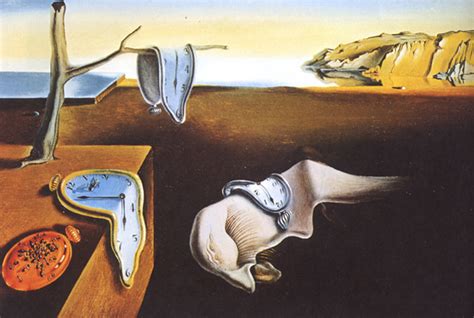
A University of California study has shown that DST doesn’t save anyone any money at all. In fact, it’s costing consumers extra, to the tune of $3.19 in extra utility bills per year. The study was made possible because of the peculiarities of the state of Indiana, which was only partially on DST until 2006. When the whole state finally went DST (to sync with the national business day), some comparisons vs. the prior method were made apparent. The study calculated that the shift costs Indiana residents an extra $8.6 million in electricity bills in total.
If the justification for DST has always been energy savings, why isn’t ‘saving daylight’ burning fewer light bulbs and saving energy?
It is, according to the study. But while lighting bills were reduced, air-conditioning units had to run more often, because people were home on hot afternoons when they’d otherwise be still at the office. Heaters had to be run on cool mornings, and lights on too, when people got up and it was still dark outside.
Professor Matthew Kotchen, who pioneered the study, noted, “I’ve never had a paper with such a clear and unambiguous finding as this.”
Even in 1976, three years after DST went into effect, the National Bureau of Standards found that there was no significant energy savings after the switch.
Not to be convinced by mere facts, Congress is determined to take us out of the ‘dark ages’ and into ‘enlightenment’ by extending the time zone hour change even more this year.
The source of this bright idea is, not surprisingly, the ever-meddlesome Congressman Ed Markey, who calls the bill “a huge victory for sunshine lovers.”
There are some places that need just the opposite: shorter sunny evening hours. Once the sun goes down and the temperature falls to the high 80s, you can actually enjoy being outside.
The ostensible goal of the bill is energy saving, but the evidence is not just missing, the costs are just ignored: more demand for energy-guzzling air conditioning in the populous, hot southern states. If the global warming proponents are genuine, why are they not proposing a repeal of daylight savings time change?
Parents and schools worry about the safety of children who will now be traveling to school in the dark before the later sunrise.
The airline industry is worried about the effect on Thanksgiving travel. The Sunday after Thanksgiving is one of the biggest travel days of the year and forgetting to change a clock in a hotel or wherever causes confusion. The Air Transport Association of America Inc., which represents major U.S. airlines, argues that it would throw U.S. international schedules further out of sync with Europe. It says a two-month extension would cost the U.S. airline industry $147 million and disrupt overseas travel.
For computer equipment, software is used to automatically update many systems but far more devices require manual updates to get them on the new time. Count up the time devices you have just in your own home and how much time you’ll take going to each one to change and reprogram.
Disruption to people’s sleep habits, confusion while traveling, and lost productivity from sleep deprived workers are just a few of the ill effects of a system that gains us nothing.
In fact, DST causes more energy consumption. People coming home from work get in their cars and drive to the beach, lake, or go shopping, while it is still daylight. DST is supported by the retail industry because it is an opportunity to increase sales and get more money from consumers. Businesses benefit from these end of day shopping hours.
Another spurious claimed benefit is reduced road toll. This is based on the statistic that more collisions occur in the dark. With DST, darkness is not repealed. People will still drive at night, meet people after dark, and choose to drink and drive.
Part of the pros and cons of DST relate to the latitude people live in. Besides the different daytime temperatures and energy use mentioned above, higher latitude dwellers see the effect of sunrise and sunset hours quite differently. Any benefits of changing the time of day are unconvincing. Alaska has a statewide movement to abolish it. Arizona and Hawaii do not change their clocks.
Conflict also appears to be along urban and rural lines. A farming lifestyle is more in tune with the natural and gradual daily changes, while the urban society works on mechanized organization at precise times. The earliest uses of time-keeping itself was the church clock and bell to summon residents to worship.
One of the least convincing arguments is that somehow DST is progressive, modern, and forward thinking. Opponents are called backward, old-fashioned and unsophisticated.
Whatever side you may be on, energy saving is not a justification. A consensus of time keeping is for convenience, but when you think about it the choice of time zone clock numbers, Swatch Internet time, or any time convention, is purely arbitrary.
If you live in the US but not Arizona or Hawaii, and want to synchronize with Federal and State time, put your clocks forward one hour at 1 a.m. on Sunday March 9; put them back again on November 2.