Hurricane Irene caused extensive damage to east coasts states from NC to NY.
Atlantic Hurricane Season
June 2011 forecast
2011 Actual
Named storms (>35mph)
16
19
Hurricanes (>72mph)
9
7
Major hurricanes (>111mph)
5
3
US landfall likelihood
72%
16%
Gulf Coast landfall
47%
10%
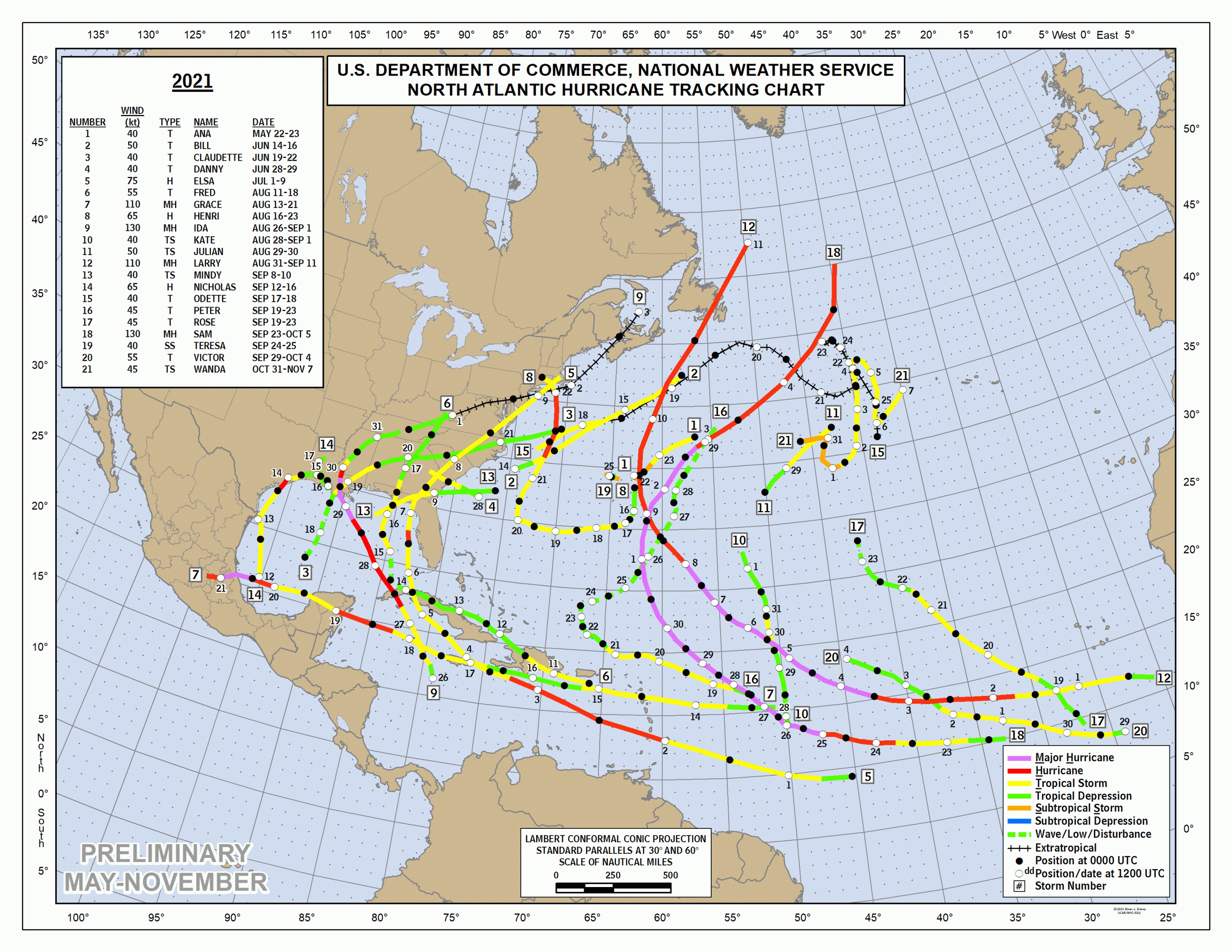
Don – Tropical Storm, 59mph, July 27-29, landed near Baffin Bay, Texas as a rainy depression.
Lee - Tropical Storm, 60mph, September 1-4, landfall Pecan Island, Louisiana with 10″ rainfall.
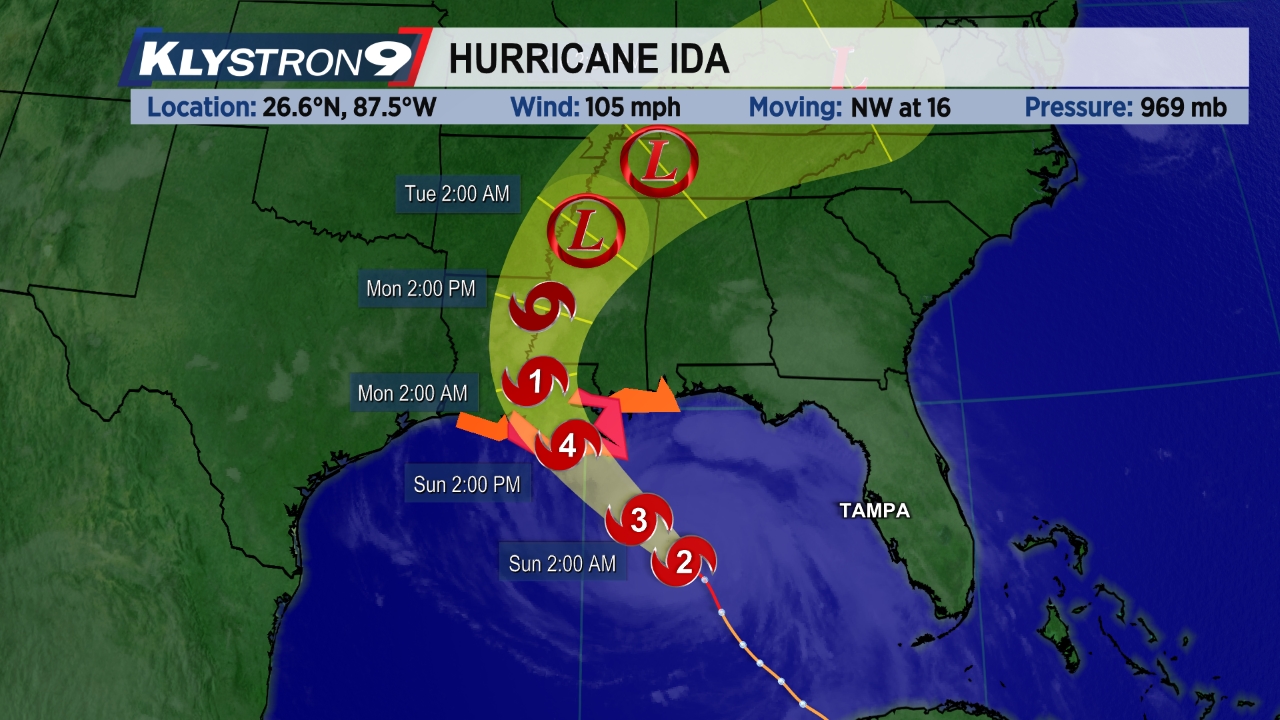
Irene – Hurricane Category 3, 120mph, August 20-28, landfalls on Puerto Rico; Cape Lookout, North Carolina; Little Inlet, New Jersey; New York City, with substantial damaging wind and rain on the east coast states.
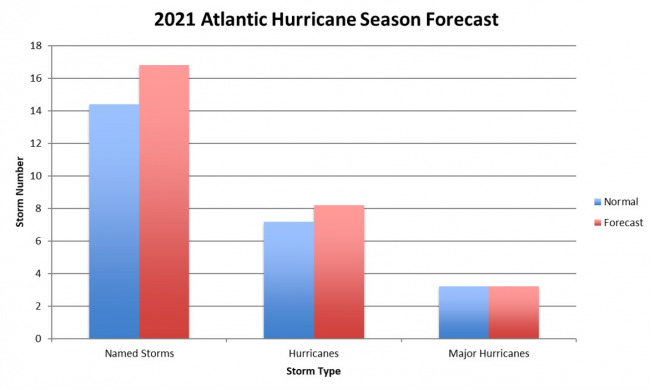
The forecast for the Atlantic basin hurricane season of 2011 has been released by the Colorado State University Department of Atmospheric Science from Dr. Philip J. Klotzbach and Dr. William Gray.
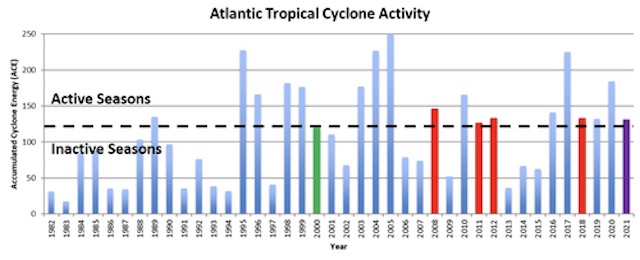
They continue to foresee above-average activity for 2011, and above-average probability of a major hurricane landfall.
“We have decreased our seasonal forecast slightly from early December, due to anomalous warming in the eastern and central tropical Pacific and cooling in the tropical Atlantic.
This forecast is based on a new extended-range early June statistical prediction scheme that utilizes 29 years of past data. Analog predictors are also utilized. We expect current La Niña conditions to transition to near-neutral conditions during the heart of the hurricane season. Overall, conditions remain conducive for a very active hurricane season.”
Atlantic Hurricane Season
June 2011 forecast
1950 – 2000 average
Named storms (>35mph)
16
9.6
Hurricanes (>72mph)
9
5.9
Major hurricanes (>111mph)
5
2.3
US landfall likelihood
72%
52%
Gulf Coast landfall
47%
31%
An interesting section of this year’s report is an analysis of wide-spread speculation that global warming is increasing hurricane activity. Using data back to 1945, there have been periods of increased activity during cooling trends, and decreased activity during warming.
“The U.S. landfall of major hurricanes Dennis, Katrina, Rita and Wilma in 2005 and the four Southeast landfalling hurricanes of 2004 – Charley, Frances, Ivan and Jeanne, raised questions about the possible role that global warming played in those two unusually destructive seasons. In addition, three category 2 hurricanes (Dolly, Gustav and Ike) pummeled the Gulf Coast in 2008 causing considerable devastation.
Some researchers have tried to link the rising CO2 levels with SST (sea surface temperature) increases during the late 20th century and say that this has brought on higher levels of hurricane intensity.
These speculations that hurricane intensity has increased due to CO2 increases have been given much media attention; however, we believe that they are not valid, given current observational data.”
“For instance, in the quarter-century period from 1945-1969 when the globe was undergoing a weak cooling trend, the Atlantic basin experienced 80 major (Cat 3-4-5) hurricanes and 201 major hurricane days. By contrast, in a similar 25-year period from 1970-1994 when the globe was undergoing a general warming trend, there were only 38 Atlantic major hurricanes (48% as many) and 63 major hurricane days (31% as many). Atlantic SeaSurfaceTemperatures and hurricane activity do not follow global mean temperature trends.”
Closer to our home here on Anna Maria Island, the historical record of hurricane paths over the last 90 years looks like trending to lower landfalls, but odds are still high.
“We believe that the Atlantic basin remains in an active hurricane cycle associated with a strong THC (thermohaline circulation). This active cycle is expected to continue for another decade or two at which time we should enter a quieter Atlantic major hurricane period like we experienced during the quarter-century periods of 1970-1994 and 1901-1925.”
The official start to the Atlantic Hurricane Season is June 1st. Now is a good time to make preparations for an emergency evacuation and formulate your disaster plan, check your insurance, storm shutters, and put together emergency supplies.
The Department of Atmospheric Science at Colorado State University has published its forecast for the Atlantic basin 2010 hurricane activity, based on over 58 years of past data and predictive statistical analysis. Early season forecasts are for the following:
Atlantic Hurricane Season
April 2010 forecast
1950 – 2000 average
Named storms (>35mph)
15
9.6
Hurricanes (>72mph)
8
5.9
Major hurricanes (>111mph)
4
2.3
US landfall likelihood
69%
52%
Gulf Coast landfall
45%
31%
According to forecasters Philip J. Klotzbach and William M. Gray, “We continue to foresee above-average activity for the 2010 Atlantic hurricane season. We have increased our seasonal forecast from the mid-point of our initial early December prediction due to a combination of anomalous warming of Atlantic tropical sea surface temperatures and a more confident view that the current El Niño will weaken. We anticipate an above-average probability of United States and Caribbean major hurricane landfall.” (as of 7 April 2010) For the full report click here.
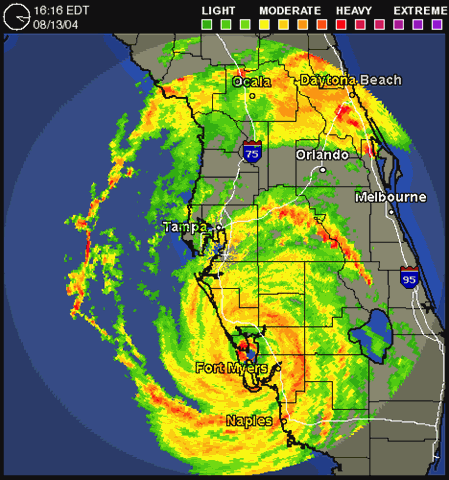
The active year of 2005 and Hurricane Katrina may have passed into memory, and the past few years have seen quiet seasons for the Florida Gulf Coast even asa record breaking two intense Category 5 hurricanes made landfall in Mexico 2007. In 2004 Hurricane Charlie over-washed North Captiva Island, causing major damage there and Charlotte Harbor surroundings. Although not far away, Anna Maria Island was unaffected by Charlie’s small but heavy footprint.
The frequency of hurricanes may have declined over the last 44 years but the intensity of storms has increased. Now with a much larger population and more dense development, Florida and the Sun Coast is more vulnerable to the effects of hurricanes than ever before.
Check your local and regional papers for hurricane preparedness information and tips that come out at this time of year, and know your evacuation routes and destination. Find a location that is not subject to flood zone evacuation advisories and as near as possible in order to avoid being trapped by traffic congestion and clogged roads. Avoid using public shelters, which will be over-crowded and under-serviced. See flood zone and shelter information for Manatee County or the telephone book for a map.
Anna Maria Island’s three bridges to the mainland will all be closed at some time in a major storm, preventing egress of residents or entrance by emergency services. Consider the ramifications of ‘riding out the storm’ or trying to return when there is no power, water, or communication, perhaps for many days or weeks.
Review your insurance policies and gather important papers ready for evacuation. Home owners’ insurance does not cover damage from rising waters but NFIP offers taxpayer-subsidized flood insurance policies. If a named storm is in the area insurance policies will not be issued therefore get prepared well in advance.
Remember that residents of Holmes Beach must obtain a hanging tag for re-entry after evacuation.
There’s more to surviving hurricane season than knowing how and when to evacuate. Even in summers without any significant hurricanes coming near the island, I have noticed that hurricanes still interfere with life, and cause stress.
We usually are very lucky to get plenty of warning about every major storm of the season. The tracking begins very early, when they still are far from Florida. Although this early warning can save lots of lives, it also wears on the nerves, as we pay attention to every single storm for days and days. There’s usually a storm somewhere, so this means we are looking at storms and worrying about the results for most of the summer. If nothing else, it is distracting and tiring.
From June through October, we tend to obsess about watching tropical updates on the local news channel and on the Weather Channel, at ten minutes before the hour. Then there are all the programs about storm disasters. It’s enough to make you nervous even if no storm comes your way.
Then, if it looks like a storm might be coming your way, life is interrupted even more. At our house, we begin to pay attention to how many bottles of water we have, and to how much canned and dried food. If the predicted cone-shaped path of the hurricane continues to include Anna Maria Island, we then start organizing our important possessions. We make sure we have enough plywood for the windows. In the years before we had a mainland evacuation destination, we also would look around for motels on the mainland, and often we’d make a reservation just in case we needed it. The problem is that it’s sometimes difficult to know, ahead of time, exactly which nights you might need that reservation. And you might not need it at all. But if you wait, the motels will be full and there is the risk of having nowhere to go.
Anna Maria Island beaches felt the effects of Hurricane Ike this week with several days of high surf and high water.
Every day this past week brought a good swell and copious waves as Ike passed 300 miles away to the south west of Anna Maria Island.
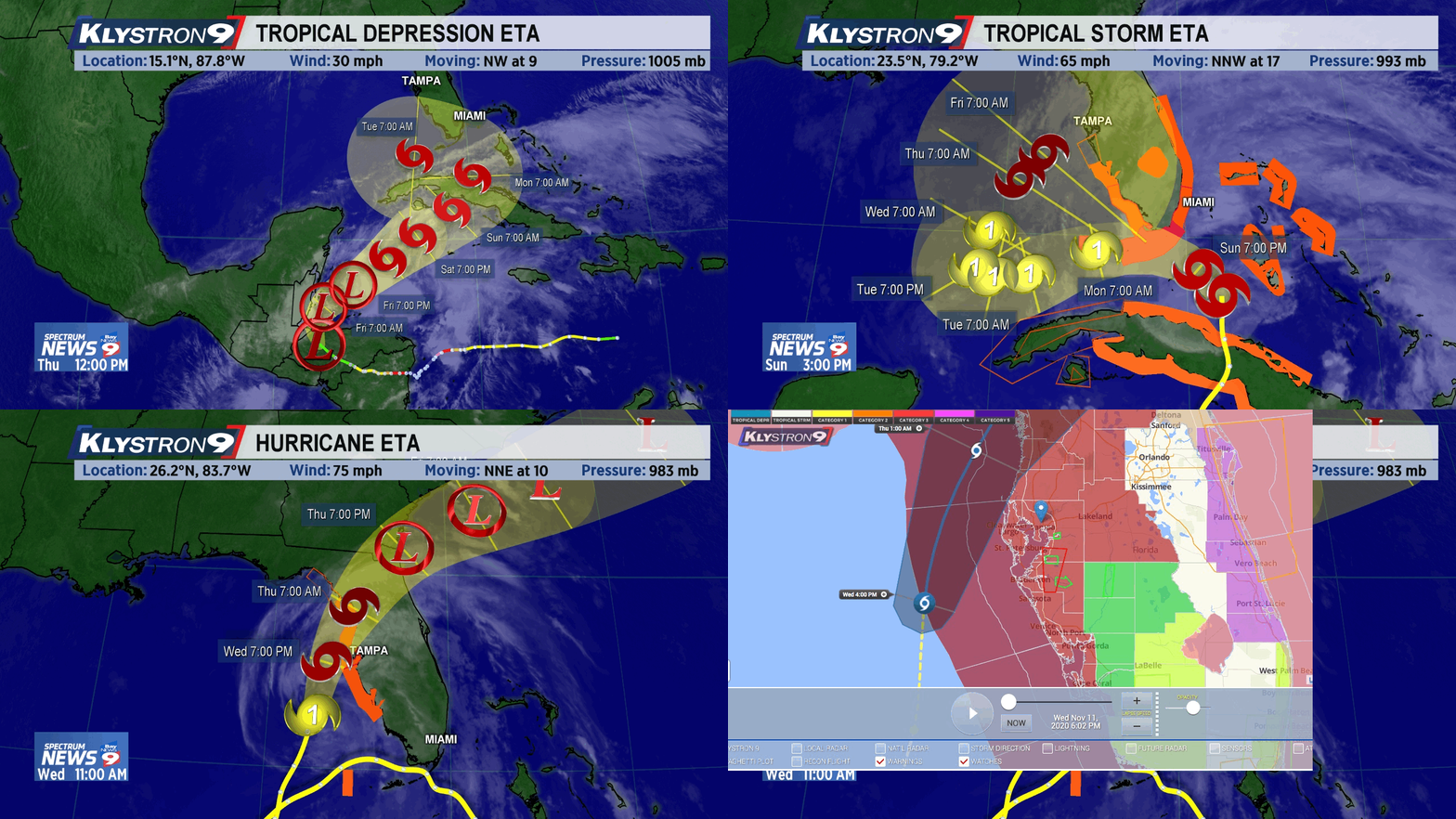
The storm emerged off the coast of Cuba into the Gulf of Mexico with Tropical Storm strength winds and soon intensified into a Category 2-3 hurricane heading northwest.
All eyes were on the tropics this week as a tropical depression in the Atlantic became a storm named Fay, when wind speeds hit 39 mph.
As Fay crossed the Dominican Republic and Haiti, forecasters correctly predicted a turn to the NW and over Cuba. With no sign of weakening over land, Fay headed toward Florida’s SW coastline, maintaining 60mph winds, and leaving a wake of flooding rains as it made its first US landfall over Key West.